

Latest Weekly News
110V vs 240V Site Lighting: Which Is Right for Your Project?

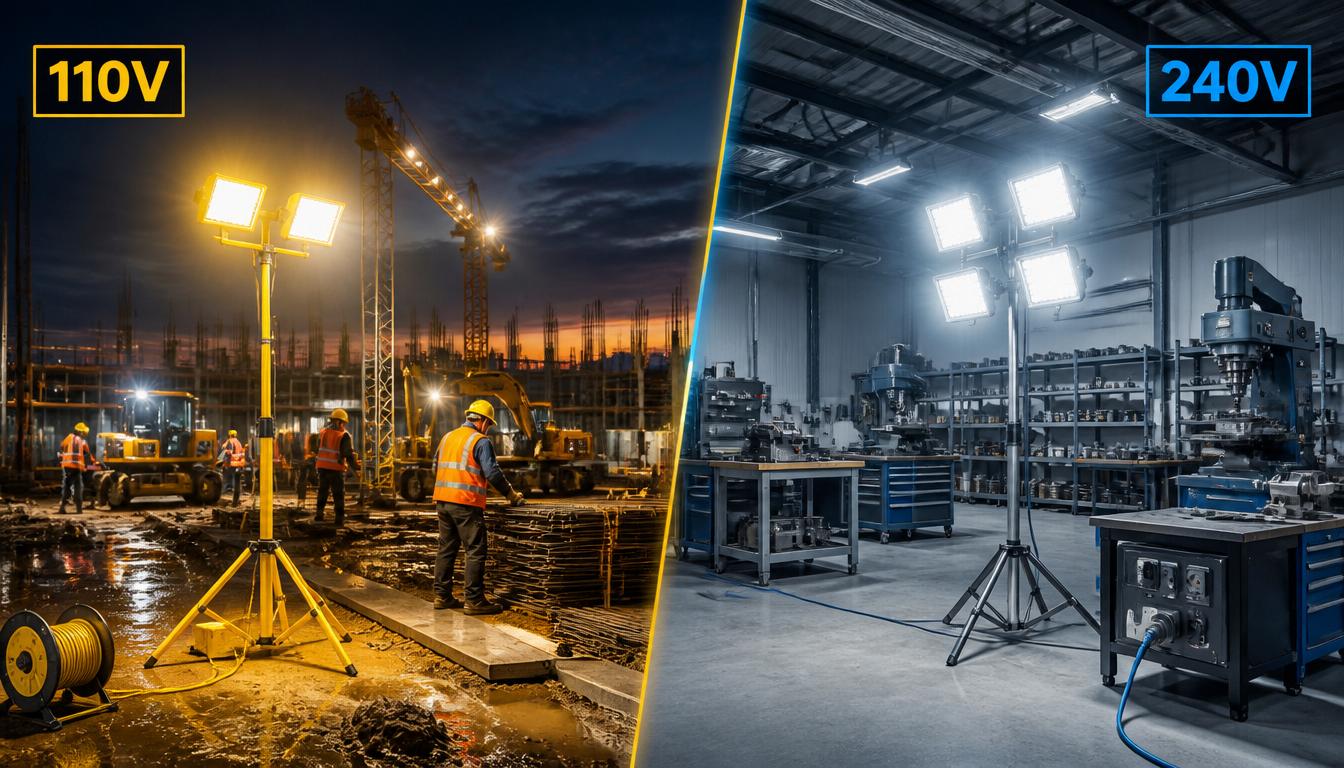
Site lighting refers to portable or fixed lighting systems used on construction sites, workshops, and industrial areas to provide visibility where natural light is insufficient. In simple terms, it ensures workers can safely and efficiently carry out tasks in low light or nighttime conditions.
Choosing between 110v site lighting and 240v site lighting is important because the wrong setup can affect safety, performance, and compliance on site. Understanding the difference helps contractors and site managers select the most suitable option for their project needs.
Why Site Lighting Choice Matters
Good lighting is not just about visibility, it directly impacts safety and productivity on-site.
Proper construction site lighting helps:
- Prevent accidents and trip hazards
- Improve accuracy in detailed work
- Maintain productivity in low light conditions
- Ensure compliance with UK site safety standards
- Support safe operation during night shifts or winter months
This makes lighting selection a key part of planning any industrial lighting UK setup.
Common Issues with Incorrect Site Lighting
Many sites face problems when the wrong lighting system is used:
- Excessive glare causing poor visibility or eye strain
- Electrical risks when using unsuitable voltage systems
- Inadequate lighting coverage in large work areas
- Equipment failure due to harsh site conditions
- Increased safety incidents in poorly lit zones
These issues often arise when lighting is chosen without considering voltage compatibility or site environment.
Choosing Between 110V and 240V Site Lighting
The solution is to match lighting voltage to the work environment and safety requirements.
1. Understand Site Risk Level
Different environments require different safety levels:
- High-risk construction sites → 110V systems
- Controlled indoor areas → 240V systems
2. Consider Power Safety Requirements
Lower voltage systems are generally safer in exposed environments.
3. Match Lighting to Project Scale
Large projects may require multiple lighting units with different configurations.
110V vs 240V Site Lighting Comparison
| Feature | 110V Site Lighting | 240V Site Lighting |
| Safety Level | High (reduced shock risk) | Moderate (standard mains voltage) |
| Common Use | Construction sites, outdoor work | Indoor spaces, controlled environments |
| Brightness Output | Sufficient for site work | Higher brightness potential |
| Risk in Wet Conditions | Lower risk | Higher risk without protection |
| Portability | High | High |
| Ideal Environment | Active construction sites | Workshops, offices, indoor projects |
Understanding Construction Site Lighting Needs
When selecting construction site lighting, it’s important to consider:
- Size of the work area
- Duration of lighting required
- Weather exposure (rain, dust, wind)
- Voltage safety requirements
- Mobility and installation flexibility
These factors ensure the lighting system performs effectively in real site conditions.
Key Features of Industrial Site Lighting UK Systems
High-quality industrial lighting UK solutions typically include:
- Impact resistant housing for tough environments
- Weatherproof or IP rated designs
- Energy efficient LED technology
- Stable mounting options for flexibility
- Compliance with UK safety standards
These features ensure reliable performance across demanding environments.
Benefits of Choosing the Right Site Lighting
Selecting the correct system provides several advantages:
- Improved safety and reduced accident risk
- Better visibility for accurate work
- Increased productivity during low light hours
- Reduced equipment failures
- Compliance with UK construction regulations
For contractors, these benefits directly improve site efficiency and worker safety.
Conclusion
Understanding the difference between 110v site lighting and 240v site lighting is essential for safe and efficient project planning. By using a clear site lighting comparison, contractors can select the right system based on environment, risk level, and project scale. Whether used for construction sites or controlled indoor spaces, choosing the right industrial lighting UK solution ensures better safety, visibility, and performance across all working conditions.
FAQs
1. What is site lighting?
Site lighting refers to portable or fixed lighting systems used to provide visibility in construction, industrial, and workshop environments.
2. Why is site lighting important on construction projects?
It improves visibility, enhances safety, and helps maintain productivity in low light conditions.
3. What is the main difference between 110V and 240V site lighting?
110V lighting offers greater safety in high risk environments, while 240V lighting uses standard mains voltage.
4. Why is 110V site lighting commonly used on construction sites?
It reduces the risk of electric shock and is better suited to exposed and demanding work environments.
5. Where is 240V site lighting typically used?
It is commonly used in workshops, offices, and other controlled indoor environments.
6. Which type of site lighting is safer in wet conditions?
110V site lighting is generally considered safer in wet or exposed outdoor conditions.
7. Can poor lighting affect workplace safety?
Yes, inadequate lighting can increase accident risks, trip hazards, and errors during work.
8. What factors should be considered when choosing site lighting?
Consider site size, lighting duration, weather exposure, voltage requirements, and mobility needs.
9. How does lighting improve productivity?
Good lighting allows workers to perform tasks more accurately and efficiently, especially in low light conditions.
10. What are common problems caused by incorrect site lighting?
Issues include glare, poor coverage, equipment failure, and increased safety incidents.
11. What features should quality industrial site lighting have?
Look for impact resistant construction, weatherproofing, LED technology, and secure mounting options.
12. Why are IP rated lighting systems beneficial?
They provide protection against dust and moisture, making them suitable for harsh site environments.
13. What are the advantages of LED site lighting?
LED lights are energy efficient, durable, and provide consistent illumination over long periods.
14. How does the right site lighting support compliance?
Proper lighting helps meet workplace safety requirements and supports safe working conditions.
15. How do I choose between 110V and 240V site lighting?
Choose 110V for high-risk construction environments and 240V for controlled indoor settings where standard mains power is suitable.