

Latest Weekly News
How to Choose Site Lighting for Outdoor Construction Projects

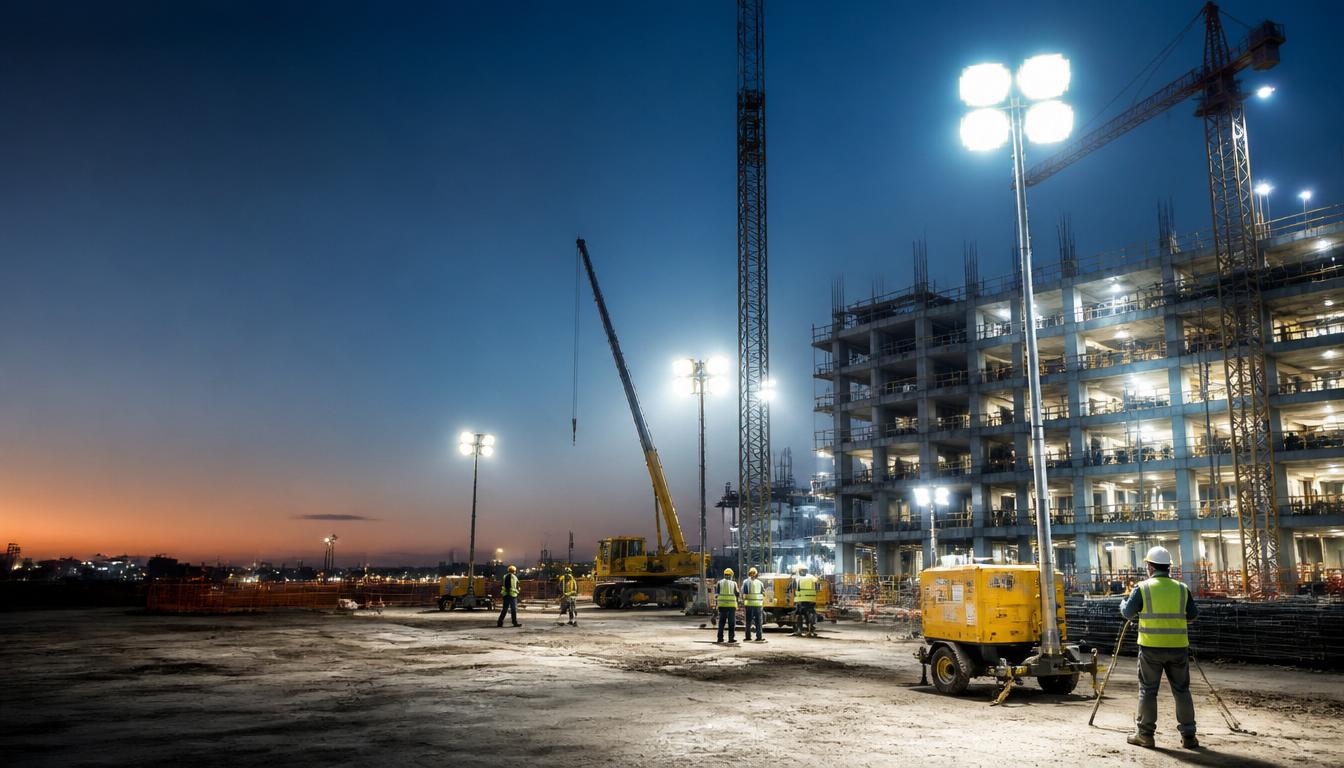
Site lighting refers to portable or fixed lighting systems used to illuminate outdoor construction areas where natural light is insufficient. In simple terms, it ensures workers can see clearly and safely carry out tasks at any time of day or night.
Choosing the right outdoor construction lighting is important because poor visibility on-site can lead to accidents, delays, and reduced productivity. A well-planned lighting setup improves safety, supports efficient work, and ensures compliance with construction standards.
Why Site Lighting Selection Matters
Outdoor construction sites are constantly exposed to changing conditions such as weather, dust, and uneven terrain. Without proper lighting, even routine tasks become risky.
Effective industrial site lighting helps:
- Improve visibility in dark or enclosed work zones
- Reduce accidents and trip hazards
- Support accurate and precise work
- Maintain productivity during night shifts or winter hours
- Ensure compliance with safety requirements
This makes lighting planning a critical part of any site lighting guide.
Common Issues with Poor Site Lighting Choices
Many outdoor projects face ongoing problems due to inadequate lighting setups:
- Uneven brightness creating dark and unsafe areas
- Temporary lights failing in harsh weather conditions
- Excessive glare causing eye strain and reduced visibility
- Inconsistent lighting coverage across large sites
- Frequent breakdowns in low-quality systems
These issues often result in safety risks and slower project progress.
How to Choose the Right Site Lighting
The solution is to evaluate site conditions and match them with the right lighting type before installation.
1. Assess the Site Environment
Consider factors such as:
- Size of the construction area
- Weather exposure (rain, wind, dust)
- Working hours (day vs night shifts)
2. Choose the Right Lighting Type
Different work lights for construction suit different needs:
- Floodlights for large open areas
- Task lights for detailed close-up work
- Tower lights for full-site coverage
3. Prioritise Durability and Weather Resistance
Outdoor environments require rugged lighting systems that can withstand tough conditions.
4. Plan for Flexibility
Temporary site lighting should be easy to install, move, and adjust as the project progresses.
Outdoor Construction Lighting Comparison
| Feature | Basic Site Lighting | Standard Work Lights | Industrial Site Lighting |
| Brightness Level | Low | Medium | High-intensity coverage |
| Durability | Low | Moderate | High (site-ready build) |
| Weather Resistance | Limited | Basic protection | Fully weatherproof design |
| Coverage Area | Small | Medium | Large construction zones |
| Installation | Fixed or limited | Semi-flexible | Fully adaptable systems |
| Ideal Use | Small tasks | General construction | Large-scale outdoor projects |
Key Features to Look for in Site Lighting
When choosing industrial site lighting, focus on features that ensure reliability:
- High lumen output for strong visibility
- Weatherproof and dust-resistant casing
- Energy-efficient LED technology
- Adjustable mounting and positioning options
- Shock-resistant construction for site durability
These features ensure consistent performance in demanding environments.
Benefits of Proper Site Lighting Selection
Using the right lighting system provides several advantages:
- Improved safety across outdoor work areas
- Better visibility for accurate task completion
- Reduced downtime caused by equipment failure
- Enhanced productivity during low-light hours
- Greater flexibility in changing site conditions
For contractors, this directly improves project efficiency and safety outcomes.
Conclusion
Choosing the right outdoor construction lighting is essential for maintaining safe and efficient work environments. By following a structured site lighting guide and selecting suitable work lights for construction, contractors can ensure reliable performance across all conditions. Whether using temporary site lighting or permanent setups, proper planning ensures better visibility, improved safety, and smoother project execution.
FAQs
1. What is site lighting?
Site lighting consists of portable or fixed lighting systems used to illuminate construction and work areas.
2. Why is site lighting important for outdoor construction projects?
It improves visibility, enhances safety, and helps maintain productivity in low light conditions.
3. What risks can result from poor site lighting?
Poor lighting can cause accidents, trip hazards, reduced productivity, and work delays.
4. What factors should be considered when choosing site lighting?
Consider site size, weather exposure, working hours, and the type of work being performed.
5. What type of lighting is best for large outdoor construction areas?
Floodlights and tower lights are commonly used to provide broad coverage across large sites.
6. What are task lights used for on construction sites?
Task lights provide focused illumination for detailed or close up work.
7. Why is weather resistance important for outdoor site lighting?
Weather-resistant lighting can withstand rain, dust, wind, and other challenging site conditions.
8. What is temporary site lighting?
Temporary site lighting is portable lighting that can be easily moved and adjusted as a project progresses.
9. How does proper lighting improve workplace safety?
It reduces dark spots, improves visibility, and helps prevent accidents and injuries.
10. What problems can uneven lighting create?
Uneven lighting can leave unsafe dark areas and make it harder for workers to perform tasks accurately.
11. Why is glare a concern on construction sites?
Excessive glare can cause eye strain, reduce visibility, and negatively affect worker performance.
12. What features should quality industrial site lighting include?
Look for high lumen output, LED technology, weatherproofing, and durable construction.
13. Why are LED lights commonly used in site lighting systems?
LEDs are energy efficient, long lasting, and provide bright, consistent illumination.
14. How does flexible lighting benefit construction projects?
It allows lighting to be repositioned quickly as site layouts and work areas change.
15. What are the benefits of choosing the right site lighting system?
It improves safety, boosts productivity, reduces downtime, and supports efficient project completion.